Volga Germans
Ethnic Germans invited to farm the Volga River valley in Russia from the 1760s. They built Roman Catholic villages such as Marienthal, keeping their language and faith for generations before emigrating to Canada in 1908 and homesteading near St. Walburg, Saskatchewan, in 1910. Confirmed
Marienthal (Saratov, Russia) → St. Walburg, SK
marry
Germans from Russia
German Catholic families — the Bosers and Thalheimers — who reached Saskatchewan by way of Towner, North Dakota, a Germans-from-Russia settlement region, before settling the Reward district of west-central Saskatchewan. Confirmed
Towner, N.D. → Reward, SK
In 1948 the two lines joined through the marriage of Alexander “Alec” Herman and Mary C. (Boser) Herman, who raised six children in Saskatchewan.
Marienthal — “Mary's Valley” on the Volga
The Herman family's documented history begins in Marienthal (also spelled Mariental; Russian Tonkoshurovka), a village in the Saratov district on the Volga River. Marienthal was one of the original Roman Catholic colonies of the Volga Germans, founded on 16 June 1766. The name is German for “Mary's Valley.” Confirmed
The Volga Germans were ethnic Germans invited by Empress Catherine the Great, beginning in 1763, to farm the steppe lands along the lower Volga. They kept their German language and Catholic faith for generations, and built a large brick church in the colony in the 1830s. When Russia later revoked the privileges the settlers had been promised — above all their exemption from military service — many emigrated, first to the United States and then to the Canadian prairies, which resembled the steppes they had farmed. Confirmed
Homesteading at St. Walburg
The family that became our Hermans left Russia for Canada in 1908 and homesteaded at St. Walburg, Saskatchewan, in 1910. The town — named for the wife of its first postmaster, and also honouring Saint Walpurga — was settled largely by Germans between the 1910s and 1930s. Settlement had begun in 1907–08 when Rudolph and Walburga Musch arrived from Minnesota and opened the general store that became the district's hub. Confirmed
A small resonance: the memoir mentions ordering goods through a storekeeper named “Musch” — the same family name behind St. Walburg's founding store.
To earn a 160-acre quarter-section, a homesteader paid a $10 registration fee, then had to build a habitable house and break and crop the land over three years while living on it. The earliest prairie homes were often sod houses — strips of prairie turf stacked like brick — until a settler had time to build in log or lumber. This was the world into which the founders' generation was born. Confirmed
The Bosers — Black Sea Germans of Reward
The Boser line are also Germans from Russia, but they reached Saskatchewan by a different road. After generations in the German colonies of South Russia, the family spent time at Towner, North Dakota — one of the Dakota settlement areas where Germans from Russia gathered — before moving north to homestead near Reward, Saskatchewan. Confirmed
Reward lay inside St. Joseph's Colony, the large German Catholic settlement of west-central Saskatchewan. Founded in 1905 at Tramping Lake, the colony eventually spread across 77 townships and drew thousands of German Catholic families — many of them, like the Bosers, Germans from Russia who had first stopped in the Dakotas. An independent record, the St. Joseph's Colony homestead list, confirms a Boser family present at Reward. Confirmed
The matriarch of this line, Mary C. Boser, was born at Reward in 1921, one of the many children of Joseph Boser (1883–1965) and Anna Thalheimer (1887–1977). The family's descendant records list seventeen children in that generation — a large prairie household typical of the colony. Family record
The Union: Alec Herman & Mary Boser
Alexander “Alec” Herman (Aug 18, 1925, St. Walburg, SK – Mar 3, 2019) married, in 1948, Mary C. Boser (Dec 4, 1921, Reward, SK – Mar 24, 1996). Alec was the sixth child of John Herman and his first wife, Catherine Ortman. Together Alec and Mary raised six children — Doreen, Audrey, Bernice, Marilyn, Larry, and Allan — and from them the living family grew. Confirmed
The 1992 booklet records Mary's name as “Marie Boser”; the family uses “Mary C. Boser.” Same person — “Mary” is preferred, with “Marie” noted as a variant.
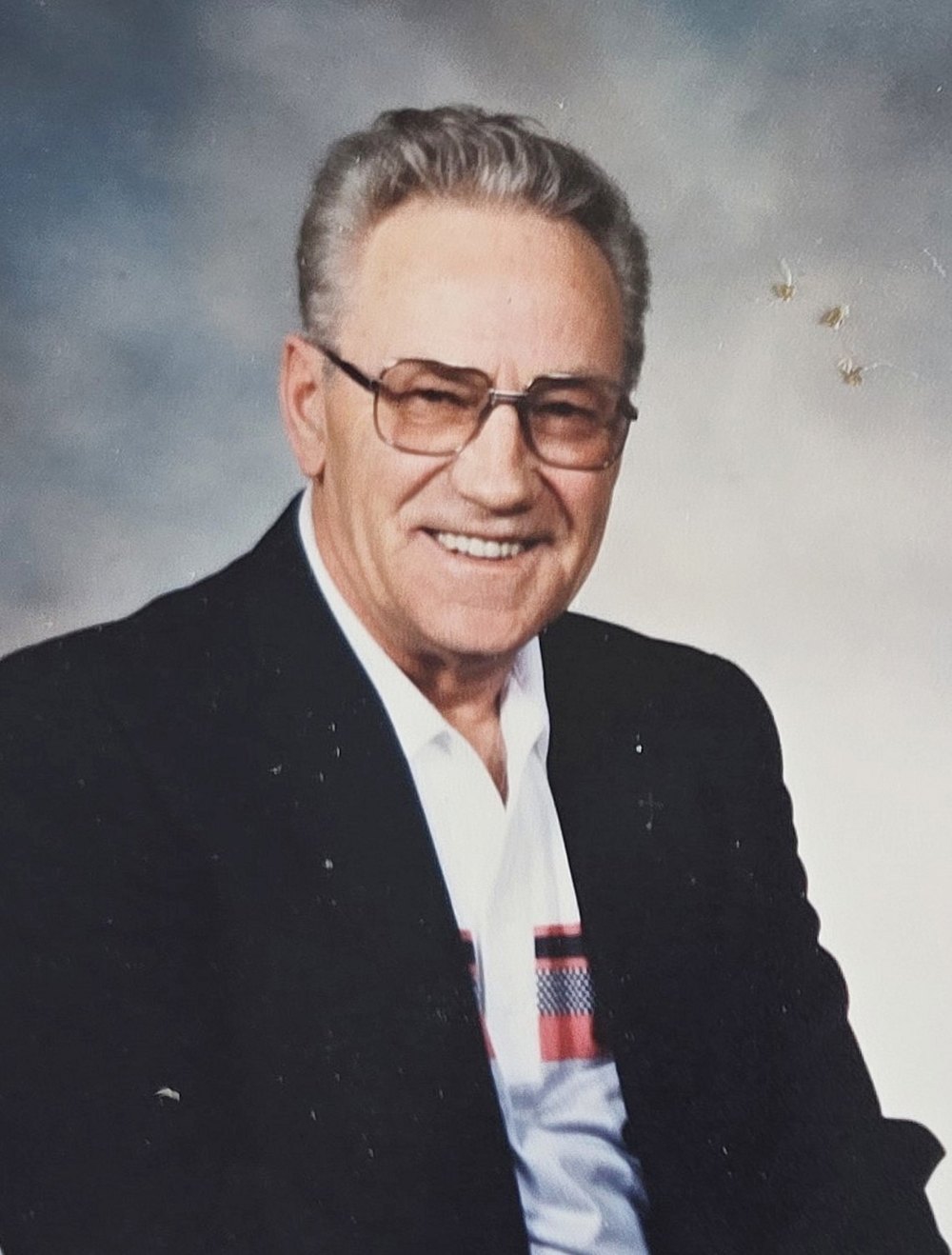
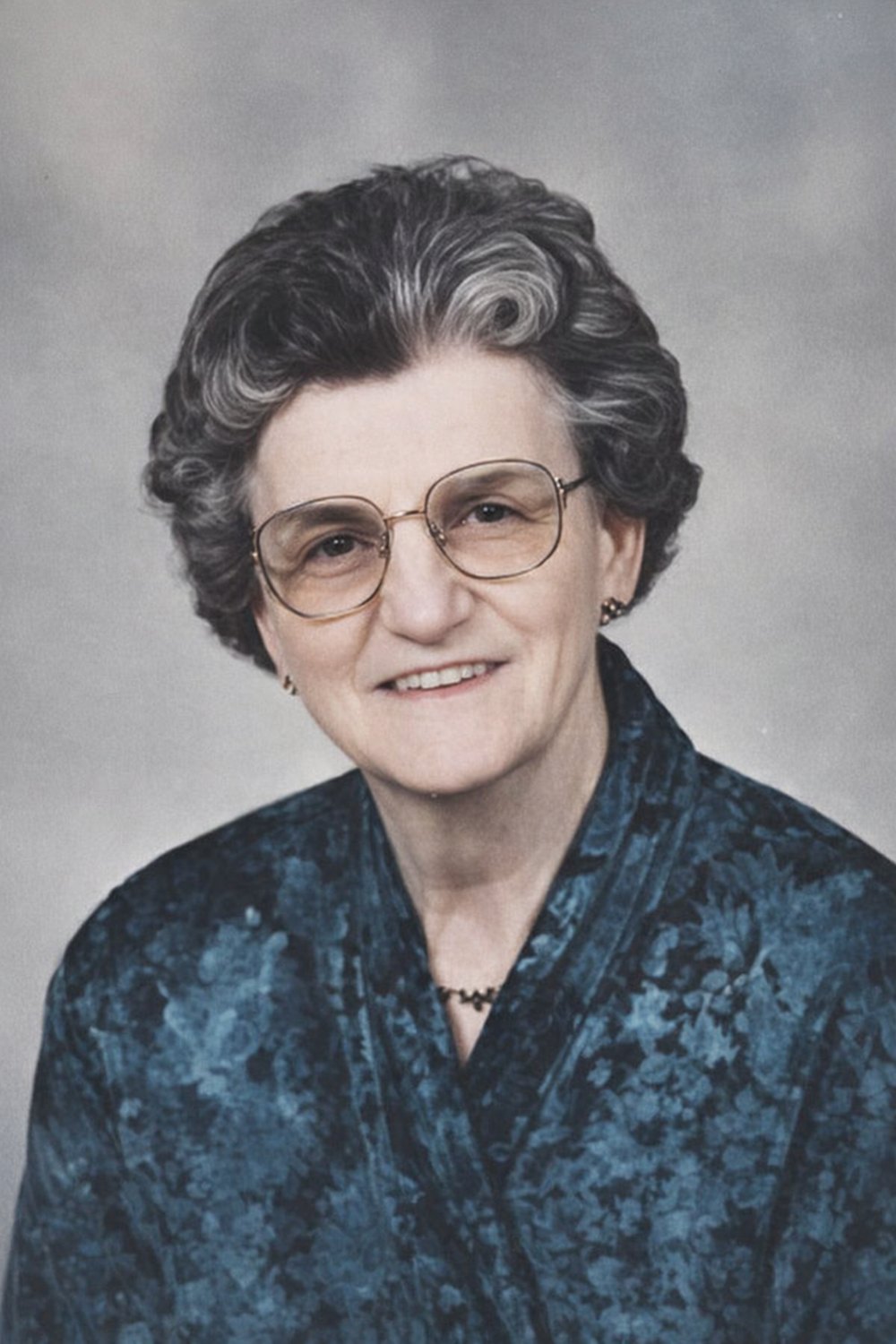
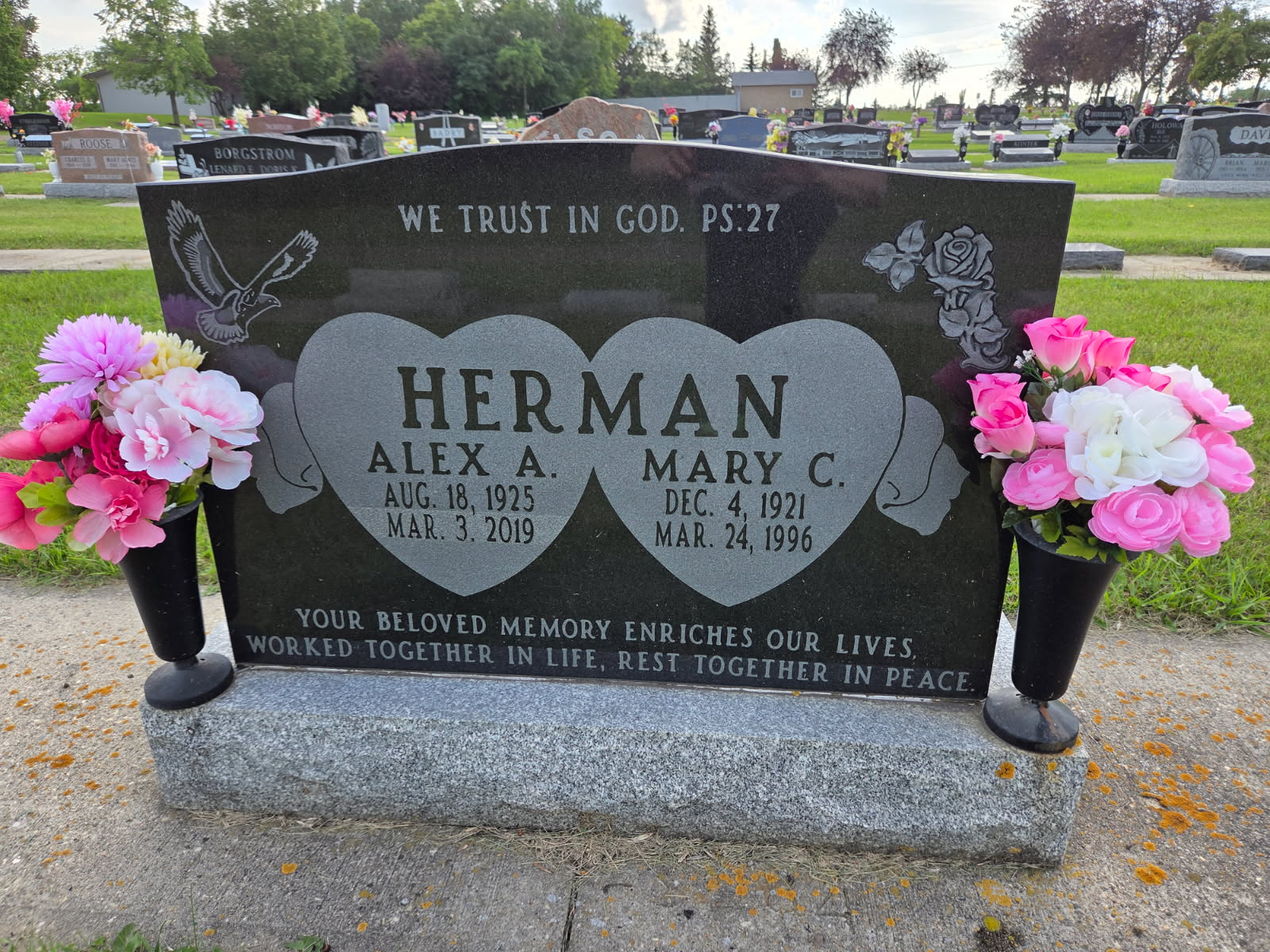
Maria & Mary C. — Two Different Women
The Herman and Boser families intermarried more than once, with several different Boser women — so the names repeat. The single most important distinction in this whole archive is between Maria (Boser) Herman, the memoir author, and Mary C. (Boser) Herman, the founder's wife — two different women, a generation apart. They are not the same person, and earlier versions of the family records accidentally merged them. The memoir lives on its own Memoirs tab and belongs to Maria alone.
Mary C. (Boser) Herman
- Married Alexander “Alec” Herman, in 1948
- Role Matriarch of this family line
- Parents Joseph Boser & Anna Thalheimer of Reward
- Her children Doreen, Audrey, Bernice, Marilyn, Larry, Allan
A stepmother-author and a matriarch-wife — fifteen years and one generation apart.
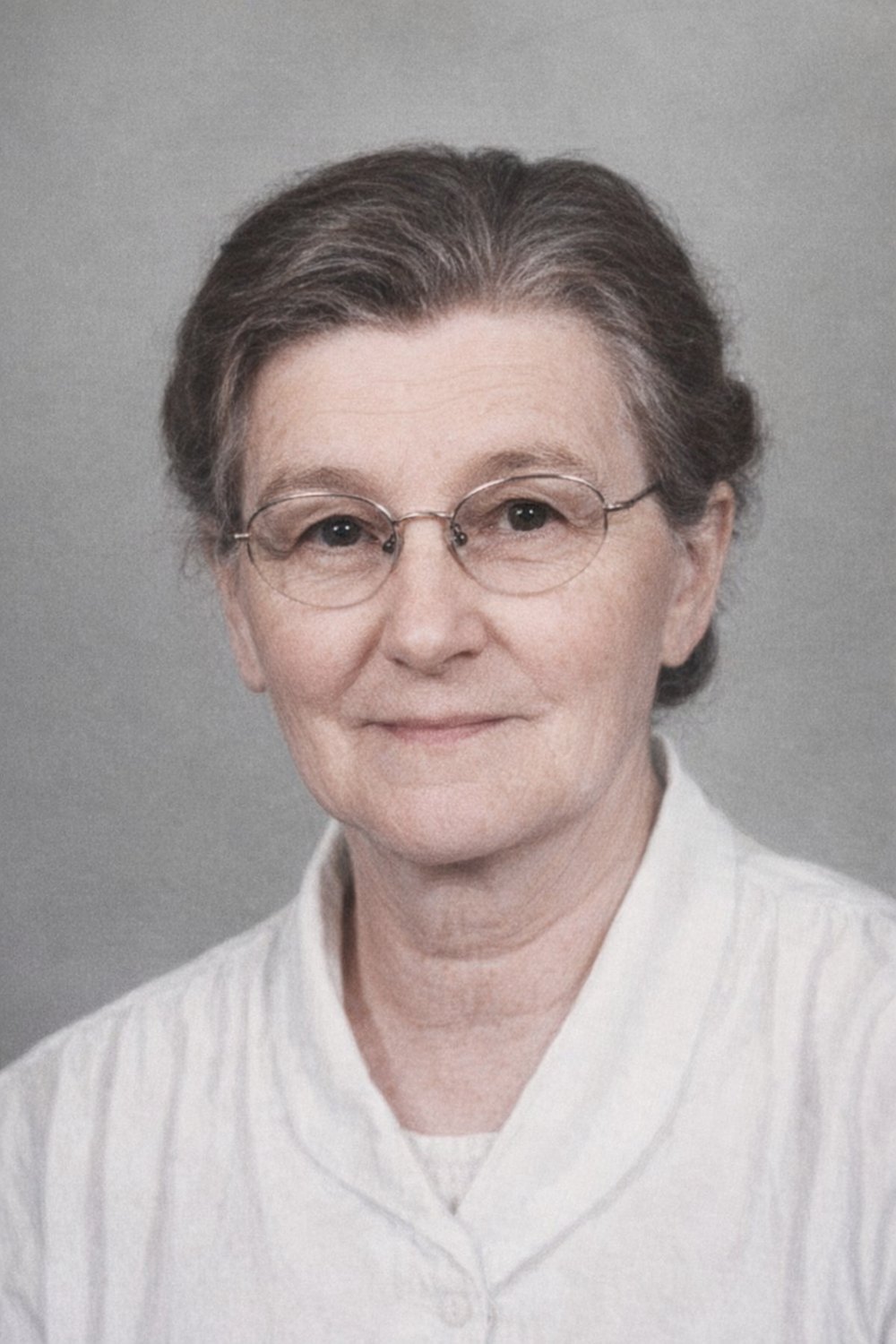
A Family Timeline
-
1766Marienthal founded on the Volga▸The Roman Catholic colony of Marienthal — “Mary's Valley” — is founded on 16 June 1766 in the Saratov district of Russia, one of the original Volga German mother colonies. Confirmed
-
~1830Frank Herman born in Marienthal▸Frank Herman — the earliest traceable Herman ancestor — is born in Marienthal around 1830. He married Catherine Boxler. Confirmed
-
1820Michael Boser born▸Michael Boser (1820–1898), the earliest figure on the deep Boser chart, married Regina Hoffman. The exact line connecting him to Joseph Boser of Reward is still to be traced on the full chart. To verify
-
1857John Herman born▸John Herman, Frank's third child, is born in Marienthal. He would later bring the family to Canada. Confirmed
-
1883Joseph Boser born▸Joseph Boser (1883–1965), father of the matriarch Mary C. Boser, is born. He later married Anna Thalheimer (1887–1977) and settled at Reward, SK. Family record
-
1891John Herman (Jr.) born▸John Herman — Alec's father, and later husband of the memoir author — is born in Marienthal. He died in 1974 in Mission, BC. Confirmed
-
1905St. Joseph's Colony founded▸St. Joseph's German Catholic Colony is founded at Tramping Lake in west-central Saskatchewan — the settlement block that would include Reward, where the Bosers homesteaded. Confirmed
-
1906Memoir author Maria Boser born▸Maria (Boser) Herman, the future memoir author, is born in Towner, North Dakota. She later married John Herman and became Alec's stepmother. Confirmed
-
1908The Hermans emigrate to Canada▸John Herman brings the family from Russia to Canada in 1908, part of the larger Volga German migration to the prairies. Confirmed
-
1910Homestead at St. Walburg, SK▸The Hermans homestead near St. Walburg, Saskatchewan — a district settled largely by Germans in these decades. Confirmed
-
~1910The Bosers settle near Reward, SK▸The Boser family — having come through Towner, North Dakota — settles the Reward district of west-central Saskatchewan, within St. Joseph's German Catholic Colony. Their presence at Reward is confirmed by the colony homestead list. Confirmed
-
1921Mary C. Boser born at Reward▸Mary C. Boser — the future matriarch — is born December 4, 1921 at Reward, SK, to Joseph Boser and Anna Thalheimer. Confirmed
-
1925Alexander “Alec” Herman born▸Alec Herman, the patriarch of this family line, is born August 18, 1925 at St. Walburg, SK. Confirmed
-
1948Alec marries Mary C. Boser▸The two streams join: Alec Herman marries Mary C. Boser, uniting the Volga German Herman line with the Boser–Thalheimer line. Confirmed
-
1950–66Six children born▸Doreen (1950), Audrey (1951), Bernice (1953), Marilyn (1957), Larry (1959), and Allan (1966) are born — across Saskatchewan, Ontario, and Alberta as the family moved for work. Confirmed
-
1966The memoir is written▸Maria (Boser) Herman writes her 40-chapter, 86-page autobiography in Haney, B.C. — the richest single record of early family life. Confirmed
Places That Shaped Us
Marienthal, Russia
The Volga German Catholic colony (founded 1766) where the Herman line kept its language and faith; birthplace of the immigrant generation.
Towner, North Dakota
A Germans-from-Russia settlement area; birthplace (1906) of the memoir author, Maria Boser, before the family moved north.
St. Walburg, SK
The Herman homestead from 1910, and birthplace of the patriarch, Alec Herman, in 1925.
Reward, SK
Home of the Joseph Boser family within St. Joseph's Colony; birthplace of the matriarch, Mary C. Boser, in 1921.
British Columbia
Where John Herman and the memoir author later moved (Mission & Haney), and where much of the family lives today.
Alberta & Ontario
Mid-century stops — Brockville, Petawawa, Edmonton, Red Deer, Camrose — as the family spread east and west for work.
Explore every family location on the interactive Map.
A Note on Names
Appears in some Saskatchewan and BC records as Harman, an anglicized drift. The family name is Herman — search both spellings.
The Bosers and Hermans intermarried more than once, so “Boser” shows up in several places. Take care to keep Maria (the memoir author) and Mary C. (the founder's wife) distinct.
Shows up under both Thalheimer and Dahlheimer in older records.
The 1992 booklet spells it several ways (Kinderknecht / Kienderknecht). Use Kinderknecht.
Go Deeper
Sources & confidence. Facts above are graded as Confirmed (the 1992 Herman Family Tree booklet and/or an independent record such as a cemetery or colony homestead list), Family record (the family's own descendant data), Tradition (family accounts not yet independently verified), or To verify. Historical context for Marienthal and St. Walburg draws on the Volga German Institute, volgagermans.org, the Encyclopedia of Saskatchewan, and the Provincial Archives of Saskatchewan. Portraits are family photographs. The maps and village scenes are original illustrations for this archive, not historical photographs.